
Beneath the surface: How seafloor life helps protect Ireland’s coastal waters
Each month, an expert from the Marine Institute will shine a light on their area of work, sharing insights on our ocean knowledge. As the national agency responsible for supporting the sustainable development of our marine resources, the Marine Institute delivers scientific knowledge, expert advice and services to government, industry and a wide range of stakeholders.
This month, Louise Healy, Benthos Ecology STO with the Marine Institute, writes about the importance of long-term benthic ecology monitoring.
.png)
For many, a trip to the coast offers a chance to relax and reconnect with nature. However, these same waters are foundational for Ireland’s economy, supporting fisheries, aquaculture, tourism and transport, while also accommodating emerging sea uses, such as offshore renewable energy.
These various human activities impact coastal waters through noise and disturbance, wastewater discharge, nutrient and chemical pollution, as well as through fishing practices. Understanding how these pressures are challenging our coastal waters is essential for protecting the natural resources that support both marine life and local economies.
For Ireland’s marine industries, healthy coastal waters underpin economic activity, providing the habitats that sustain fish, shellfish and other commercially important species from spawning to adulthood.
That is why long-term environmental monitoring is an essential element of marine management strategies; it helps identify changes in water quality and ecosystem health before they result in wider impacts on fisheries and ocean health.
Marine Institute’s Benthic Invertebrate Dataset
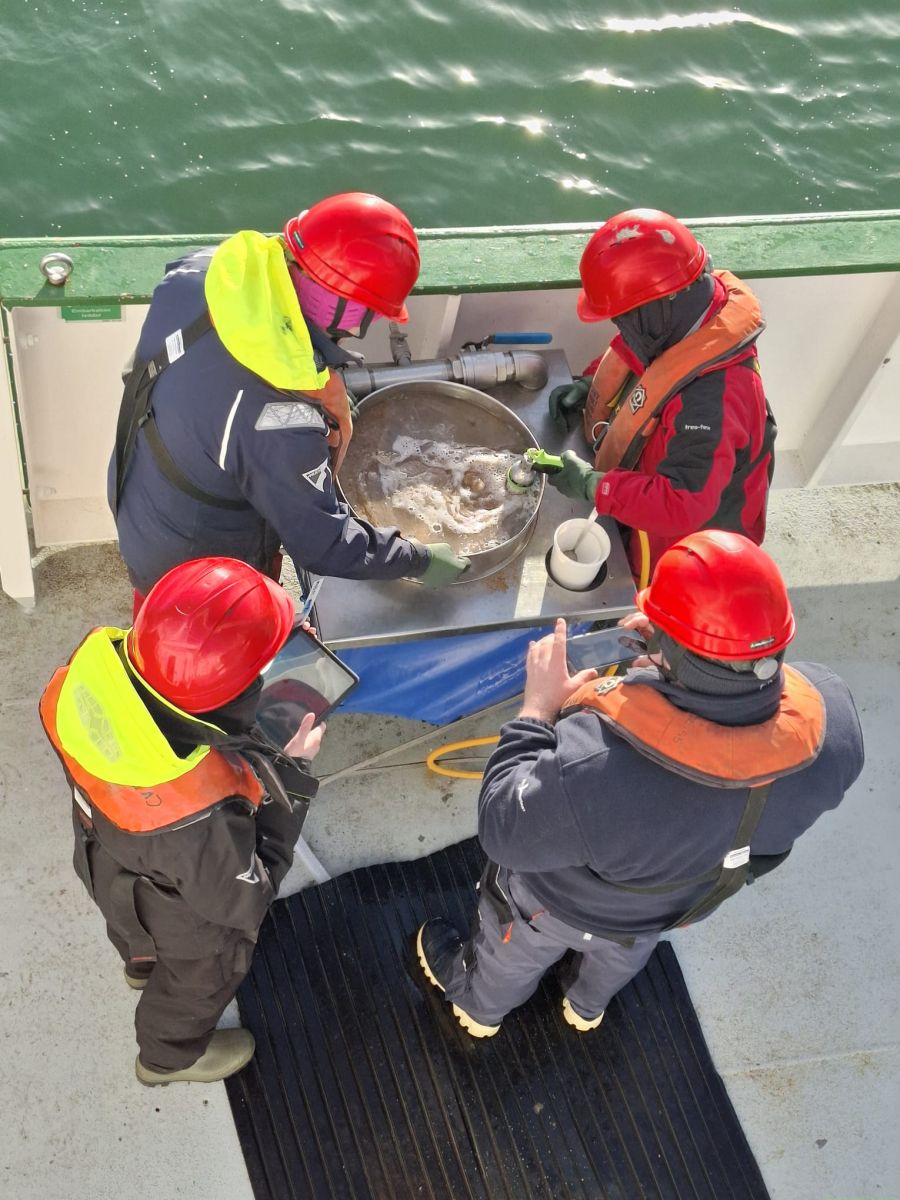
As part of Ireland's obligations under the EU Water Framework Directive (WFD), the Marine Institute monitors the ecological status of Ireland's coastal and transitional (estuarine) waters. This is done through monitoring benthic macro-invertebrate communities: Animals without backbones that live in and on the seabed, such as shellfish, crustaceans and worms. These species provide valuable insight into ecosystem health.
The Marine Institute regularly samples benthic macro-invertebrates and maintains a dataset containing records of 650,304 individual organisms from 2,529 distinct species collected during 4,415 sampling events from 2012 to 2024. In 2026, this benthic invertebrate dataset was made public, and it will continue to grow through annual updates as survey work continues.
This dataset records which species are found in different coastal areas, how many are present, the type of seabed sediment, and how much organic matter it contains. Samples are collected at sites around the Irish coast through a series of surveys carried out each year.
Looking to the seafloor for answers
While often hidden from view, benthic communities recycle nutrients, store carbon, help maintain sediment quality, and provide food for fish and other species higher up the food chain.
Because they spend most of their lives in one place, they act as natural record keepers of environmental conditions. Unlike fish, which can swim away from stressors, benthic animals remain exposed to changes in water quality, pollution, excessive addition of nutrients, habitat disturbance and other pressures.
These organisms are highly sensitive to environmental change, and their populations respond quickly to both natural events and human activities. For this reason, they are widely used as indicators of habitat quality and ecosystem health.
By identifying which species are present, as well as those that are absent, and how their populations change over time, scientists can assess whether coastal waters are in good ecological condition or if management action may be required.
These data provide critical evidence for policymakers and environmental managers, supporting marine spatial planning, conservation management, and the assessment of new developments and activities that could affect the marine environment.
The value of long-term data
Long-term environmental datasets are among the most valuable tools available to marine scientists.
A single survey provides a snapshot of environmental conditions, while repeated surveys conducted over many years tell a much richer story. They reveal gradual changes, recurring patterns, and the impacts of significant events such as storms, pollution incidents or climate-driven shifts in marine ecosystems.
Long-term datasets help scientists establish reference conditions for healthy ecosystems and identify when environmental changes exceed natural variation. They also provide the evidence needed to develop environmental indicators, assess the effectiveness of policies and support sustainable management of marine resources.
The release of the benthic invertebrate dataset follows extensive quality assurance, validation and standardisation, guided by the Marine Institute’s Data Management Quality Management Framework (DM-QMF). This framework introduced faster, consistent workflows and ensured the dataset meets FAIR principles, which means it is Findable, Accessible, Interoperable, and Reusable.
By providing centralised access to quality-checked data, this dataset enhances efficiency, streamlines data sharing, supports collaboration across research institutions, government agencies, and the broader scientific community. It also provides valuable evidence for marine management, facilitating sustainable development.
As a comprehensive long-term record of life on the seabed, the benthic invertebrate dataset represents an invaluable resource for biodiversity assessment, environmental monitoring, and marine planning in Ireland.
The tiny creatures living in the seafloor can tell us a great deal about the health of our coastal waters. Through long-term monitoring, the Marine Institute is helping to build this understanding and ensure that decisions about Ireland's marine environment are guided by the best available evidence, supporting the protection and sustainable management of our coastal waters for generations to come.
The Marine Institute Water Framework Directive monitoring is funded by Department of Housing, Local Government and Heritage (DHGLH).
This article was originally published in the Marine Times ( October 2026).