
How the Marine Institute is helping to safeguard one of Ireland's most endangered species.
Each month, an expert from the Marine Institute will shine a light on their area of work, sharing insights on our ocean knowledge. As the national agency responsible for supporting the sustainable development of our marine resources, the Marine Institute delivers scientific knowledge, expert advice and services to government, industry and a wide range of stakeholders.
This month, Dr Elvira de Eyto, Zoologist with the Marine Institute, shares the insights about the ongoing freshwater pearl mussel conservation programme.
How the Marine Institute is helping to safeguard one of Ireland's most endangered species.
Once abundant throughout Ireland's rivers and lakes, the populations of freshwater pearl mussel (Margaritifera margaritifera) are now on the brink of extinction.
To help protect the species from further decline, the Marine Institute, the National Parks and Wildlife Service (NPWS), an Executive Agency of the Department of Housing, Local Government and Heritage, and ecological consultants Moorkens and Associates launched a pilot captive breeding programme in 2019. This ongoing initiative is funded by the NPWS and utilises the Marine Institute's Long-term Ecological Research Facility near Newport, Co. Mayo. The programme forms part of wider national efforts to conserve Ireland's remaining freshwater pearl mussel populations.
Natural water filter
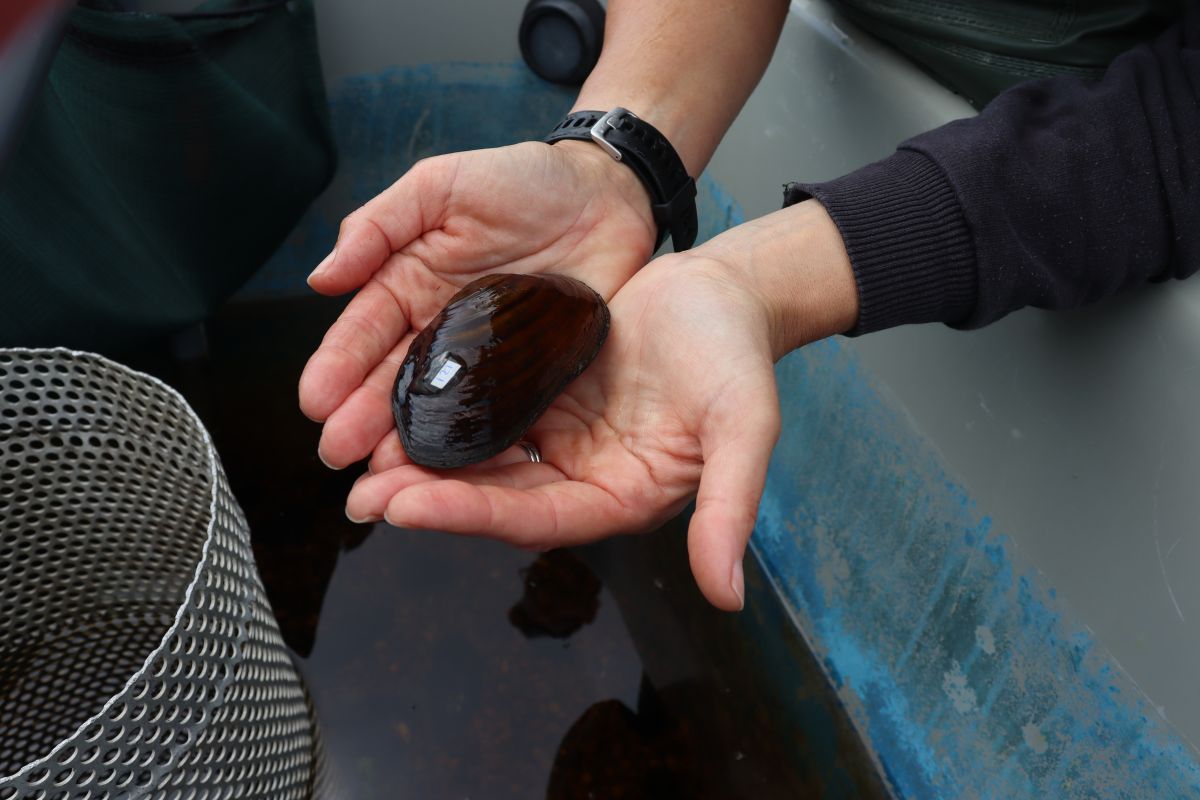
Freshwater pearl mussels are molluscs native to Irish rivers and lakes; they can live up to 140 years and grow as big as the palm of your hand. These mussels are considered a keystone species in Ireland's freshwater ecosystems, meaning they play an important role in maintaining healthy rivers and lakes. Historically, vast numbers of mussels filtered water as they fed, helping to keep it clean and clear. Today, only remnant populations remain, and their ecological role has been greatly diminished.
The species is listed as Endangered on the IUCN Red List and is one of the 365 most endangered species in the world. In Ireland, 19 Special Areas of Conservation (SACs) have been designated in an effort to conserve the pearl mussel in its habitats. The pressures affecting freshwater pearl mussel populations include sedimentation and nutrient pollution from catchment land-use practices, which degrade clean, well-oxygenated riverbed habitat and which is also exacerbated by changes in the hydrological functioning of the river.
While efforts continue to improve water quality and restore river catchments, captive breeding can provide an important safety net that could preserve vulnerable populations and produce young mussels that can one day be returned to their native rivers.
Captive breeding is a conservation strategy in which endangered species are bred in controlled environments. A small number of adult mussels are brought into a hatchery as broodstock, where juveniles can be produced and grown on in large numbers. This is important because habitat restoration is a slow process, and for many mussel populations that aren’t reproducing, the lag between restoration and measurable benefits to water quality is taking too long. Preserving the genetic potential of some populations through captive breeding can buy time for restoration efforts to take hold.
A Remarkable Life Cycle
Part of what makes freshwater pearl mussels so fascinating is their unusual life cycle. Their microscopic larvae, known as glochidia, must spend around ten months attached to the gills of Atlantic salmon or brown trout before transforming into juvenile mussels. After detaching from their host fish, juvenile mussels spend their first few years buried within the riverbed.
This dependency makes conservation particularly challenging. Not only must river habitats remain healthy, but host fish populations must also be available at the right time to support the mussels' development.
Central to any successful captive freshwater pearl mussel breeding programme, therefore, is a salmonid hatchery coupled with a reliable, clean water source in which to rear juvenile mussels. At Furnace, Newport, Co. Mayo, the Marine Institute runs a well-regulated freshwater salmonid rearing facility operated under a Health Products Regulatory Authority (HPRA) licence. Water for the hatchery is extracted directly from Lough Feeagh, which is a deep lake with good ecological quality.
Progress so far
The Marine Institute's first successful breeding attempt took place in 2020-2021 using adult mussels collected from the nearby Newport River, Co. Mayo.
Subsequent trials in 2022 and 2023 included mussels from the Owenriff River (Co. Galway) and investigated the suitability of Atlantic salmon and brown trout as host species. However, these efforts resulted in limited larval attachment and no significant production of juvenile mussels.
Then the good news arrived in 2024, when NPWS delivered mussels from the Owenea River (Co. Donegal), along with additional adults from the Newport and Owenriff Rivers. Glochidial release and attachment was observed in 5 of 6 cohorts, although only one cohort (Owenea) reached the stage of viable juvenile drop-off. Progress continued over 2025–2026, as all three river populations successfully reproduced and produced viable juvenile mussels.
This marked an important milestone for the programme and provided a valuable opportunity to compare the performance of different host fish species and populations.
Intriguing differences have already been observed between populations. For example, glochidia from the Owenriff River appear to develop more rapidly once attached to host fish than those from the Newport and Owenea populations. It will be interesting to see whether this is repeated in 2027 when the experiment is rerun.
The Next Step
The ultimate aim of the programme is to rear enough healthy juveniles for eventual reintroduction into their natal rivers, helping to strengthen wild populations and support long-term recovery.
At the Marine Institute, juvenile mussels are currently reared using water supplied from Lough Feeagh. While this provides natural conditions, the lake's cool, low-productivity waters can result in slow growth. To address this challenge, new juvenile rearing approaches are being tested from 2026 onwards. This includes controlled heating and supplemental feeding to improve growth and survival rates, helping juveniles reach a suitable size for release more quickly.
Inspiring change
An unexpected benefit of the breeding programme has been its value as an educational tool. Having freshwater pearl mussels on site provides a unique opportunity to introduce visitors, Transition Year students and local schoolchildren to one of Ireland's most remarkable and endangered species, and to share the story of its extraordinary life cycle.
Through this engagement, the Marine Institute hopes to foster a deeper appreciation of the connections between people and nature. The freshwater pearl mussel offers a powerful example of how species depend on one another: mussels help maintain clean, healthy rivers through their natural filtering activity, while Atlantic salmon and brown trout play a vital role in their reproduction and development.
This story of interdependence also reiterates the fundamental importance of healthy ecosystems to human wellbeing. By raising awareness about the freshwater pearl mussels and inspiring the next generation to value and protect the natural world, the Marine Institute, NPWS, and the programme partners hope to build a shared sense of responsibility for conserving freshwater pearl mussels and restoring the rivers and lakes on which they depend. The programme not only supports the survival of an iconic species and the abundance of Irish fisheries. It also helps to safeguard freshwater ecosystems that are essential to our own health and prosperity.
This article was originally published in the Marine Times ( September 2026).